
Showing posts with label parenting. Show all posts

Thursday, April 14, 2011

Book Review - The Essential Guide to Baby's First Year

About the Book 
A baby’s first year, from the moment of birth to the first birthday, is exciting, wonderful and sometimes confusing for both a baby and parents. With so many firsts in those twelve months, there are many questions. The Essential Guide to Baby’s First Year addresses the issues and concerns that are most important to first-time parents.
The authors, Dr. Erika Landau and Dr. Abigail Brenner, of The Essential Guide to Baby’s First Year are both parents and medical professionals. They acknowledge that babies are people and they do things in their own time and ways. Their medical knowledge supports their advice and suggestions included in the book, such as:
  • The moment of birth and beyond – what a newborn looks like, what the tests will be like, feeding, bonding, and taking the baby home
  • Clear explanations of milestones for the first year of life, broken up by quarters – and how they may vary from baby to baby
  •  Advice and suggestions on feeding, caring for, and interacting with the baby
  • Teething, sleeping, crawling, pooping – how things happen and change as months pass
  • Common illnesses, appropriate foods, necessary equipment, and more
  • Great baby food recipes for 9-12 months
“Every area of expertise in this world requires a license or certificate. But there is no license to become a parent. Neither does each bundle of joy come with instructions or a guarantee,” said Dr. Landau. “The Essential Guide to Baby’s First Year will help parents become well informed, yet able to develop and utilize their own instincts and good judgment.”

About the Authors

Abigail Brenner, M.D., (New York, N.Y. and San Francisco, Calif.) attended New York Medical College and completed her internship and residency in psychiatry at New York University-Bellevue Medical Center. She spent many years as an attending physician at the NYU-Bellevue Adult Mental Hygine Clinic and as an assistant clinical professor at New York University Medical School. A board-certified psychiatrist in practice for more than 30 years, Dr. Brenner is a Fellow of the American Psychiatric Association. She is the author of Transitions: How Women Embrace Change and Celebrate Life and SHIFT: How to Deal When Life Changes and an ordained Interfaith Minister. Dr. Brenner lives in San Francisco and New York, is married, the mother of two, and a grandmother of four.  

About The Essential Guide Series
Essential Guides condense the most important and current information and thinking on mainstream issues that matter, making them understandable for those approaching a topic for the first time. They provide a broad overview and necessary detail, but are not encyclopedic.Essential Guides anticipate readers' needs and questions, and provide solutions and answers with empathy, clarity, and respect for the reader. Authors write from a position of expertise, understanding, and personal experience which allows them to connect with readers.


My Take on the Book
As a parent of two I was amazed at all of the resources and information that this book has within it. I remember how lost my wife and I felt when we first became parents. We felt so unprepared and unknowing of the information that we would need to know. We continuously found ourselves looking at books for answers and we went from book to book trying to figure out what we should be doing. This book takes a number of the books that we read and places it all in one location. From medical issues to typical growing patterns, this book has it all!

I would highly recommend this book to any new parent as it will definitely be a life-saver!

All opinions expressed in this review are my own and not influenced in any way by the company.  Any product claim, statistic, quote or other representation about a product or service should be verified with the manufacturer or provider. Please refer to this site's Disclaimer  for more information. I have been compensated or given a product free of charge, but that does not impact my views or opinions.

-------------------------------------------------------------------------------------------
New to the Divadom or to Dad of Divas Reviews?
Please Subscribe to my RSS Feed! Subscribe in a reader
Questions?Drop me a line at dadofdivas@gmail.com

Saturday, March 12, 2011

Talking money to pre-tweens

April is National Financial Literacy Month. The national epidemic of home foreclosures, bankruptcies and joblessness has created an awareness of how easy it can be to live beyond one’s means.

A new, free digital resource from Networks Financial Institute at Indiana State University provides an interactive way for parents to talk with their pre-tweens about money while also supporting Department of Education standards for reading and math in grades 3 to 5.

 Kids Count: The Road to Financial Literacy is available at www.networksfinancialinstitute.org and includes:

  • A virtual field trip to the community of Nickelsburg where children learn to differentiate between wants versus needs as they care for Peso the Puppy
  • Downloadable activities that reinforce saving, spending, giving and budgeting concepts
  • Tips and activities parents can access to integrate money management lessons into family activities


All opinions expressed in this review are my own and not influenced in any way by the company.  Any product claim, statistic, quote or other representation about a product or service should be verified with the manufacturer or provider. Please refer to this site's Disclaimer  for more information. I have been compensated or given a product free of charge, but that does not impact my views or opinions.
 -------------------------------------------------------------------------------------------
New to the Divadom or to Dad of Divas Reviews?
Please Subscribe to my RSS Feed! Subscribe in a reader
Questions?Drop me a line at dadofdivas@gmail.com
Friday, February 4, 2011

Cupid's Valentine's Day Message to Parents: L.O.V.E.


Cupid's Valentine's Day Message
to Parents: L.O.V.E.
By Gary M. Unruh MSW LCSW
Parents are constantly under the microscope. Whether they're being compared to Chinese mothers, or childless Aunt Susie is giving her two cents' worth of parenting advice, parents are all too often left shaking their heads in aggravation. "Isn't there a simpler, less frustrating way to raise my child?"

Yes, and it's called fully developed parental love -- the age-old Valentine's message shined up for twenty-first-century frustrated parents. After counseling over 2,500 children and
Loving Family
parenting four of my own, it has become clear to me that tapping in to love's transforming power is the only way to go. Love covers all the essential parenting requirements:
L for Limit-setting, O for Openly communicating, 
V for Valuing, and E for Empathizing. One thing is certain: the more humans feel loved, the more they fully live life.
Here is a quick look at what fully developed parental love looks like.

L is for Limit-setting. Whoever invented the word love knew that the first letter needed to stand for limit-setting. Children are not born demonstrating good conduct; they need to learn acceptable behavior. Parents train their children best using two limit-setting activities: teaching good behavior and teaching a child how to stick with something until it is done (hard work pays off). Children need to learn the benefits of hard work, like giving up a fun weekend with friends to get a project done well. The right mix of fun and games with hard work will result in a responsible, resilient child.
O is for Open Communication. One of the most important needs of a child, or anybody for that matter, is to feel understood. That requires open communication. When a three-year-old hits his sister, the natural parental response is to yell and send him to his room. With open communication, understanding is the first step. Parents achieve this by calmly asking the child what made him so upset, then listening -- with no "buts." When children feel understood, they become more comfortable with themselves, more self-assured. Then, after understanding, the L comes back around -- limit-setting consistently.
V is for Valuing. At the heart of love is the letter V for valuing and validating. The need to feel valued is as important for children as their need for food. Telling children what they did right every day builds self-confidence. Children feel most valued when parents validate their feelings, especially during conflict. When Jared whines about chores, validate his frustration with "You are really frustrated and it's no fun to pick up," and then firmly set limits. He can stop whining and pick up his mess, or go to his room. A valued child is a child who wants to learn good behavior.
E is for Empathy. The learned ability to stand in another person's shoes ensures less risk for physical health problems and develops kindness, compassion, and quality intimacy. That's what happens when parents are successful in teaching their children all aspects of love, especially the valuing component. When children feel valued from the get-go, they know firsthand all about empathy. Over and over again I've seen these children become very empathetic individuals. The most gratifying success in life is enduring, close relationships -- one of the best results of developing empathy in our children.
Conclusion: When parents fully unleash their love, they can expect to raise responsible, loving, resilient children. Thank you, Cupid, for Valentine's Day -- a day devoted to experiencing the transforming power of love.
Gary M. Unruh, MSW LCSW, is a child and family mental health counselor with nearly forty years of experience. He is the author of the 2010 award-winning bookUnleashing the Power of Parental Love: 4 Steps to Raising Joyful and Self-Confident Kids (www.unleashingparentallove.com).


All opinions expressed in this review are my own and not influenced in any way by the company.  Any product claim, statistic, quote or other representation about a product or service should be verified with the manufacturer or provider. Please refer to this site's Disclaimer  for more information. I have been compensated or given a product free of charge, but that does not impact my views or opinions.
 -------------------------------------------------------------------------------------------
New to the Divadom or to Dad of Divas Reviews?
Please Subscribe to my RSS Feed! Subscribe in a reader
Questions?Drop me a line at dadofdivas@gmail.com

Friday, January 28, 2011

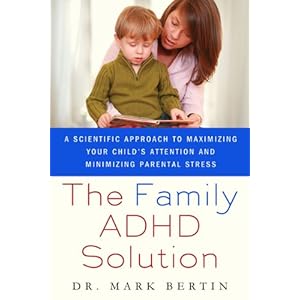
Book Review - The Family ADHD Solution

About the Book
In this accessible guide, developmental pediatrician Mark Bertin demystifies ADHD and offers advice to overwhelmed parents that includes clear explanations of:

  • Biological causes of ADHD, and the ins and outs of a thorough evaluation
  • Common symptoms, showing how they extend far beyond inattention and hyperactivity
  • Behavioral, educational and medical approaches that increase academic and social success
  • Research proven mindfulness-based stress reduction techniques for parents that benefit the whole family
  • Advice to help your child build self-esteem along with  healthy relationships with peers and with you

Mark Bertin, M.D., is a pioneering developmental pediatrician in private practice in Pleasantville NY, Director of Developmental Behavioral Pediatrics at the Westchester Institute for Human Development and assistant professor of pediatrics at New York Medical College.  He trains physicians, teachers and psychologists in ADHD care, and leads stress-reduction classes for parents.

My Take on the Book
We have been wondering lately if our oldest daughter may have ADHD. While she tests in the normal range, there are simply some tendancies that make us wonder whether this still might be the case.

This book is a must have for families that are struggling to understand ADHD as well as trying to understand what they can do to help their child in being successful. At the same time this book does a great job at helping parents cope with the issues and tendancies of an ADHD child.

I appreciated the fact that the author comes into the writing of this book with so much experience behind his belt. His expertise impressed me, and I know that in reading this, I would definitely take his thoughts and run with them seeing that he brings so much practical experience to the table.

Overall, the author not only explains the science behind how ADHD affects the brain, but also provides real tools, techniques and resources for parents to both help their children succeed at home and school as well as provide balance (and hopefully peace) back into their lives.

All opinions expressed in this review are my own and not influenced in any way by the company.  Any product claim, statistic, quote or other representation about a product or service should be verified with the manufacturer or provider. Please refer to this site's Disclaimer  for more information. I have been compensated or given a product free of charge, but that does not impact my views or opinions.
-------------------------------------------------------------------------------------------
New to the Divadom?
Please Subscribe to my RSS Feed! Subscribe in a reader
Questions?Drop me a line at dadofdivas@gmail.com
Wednesday, January 19, 2011

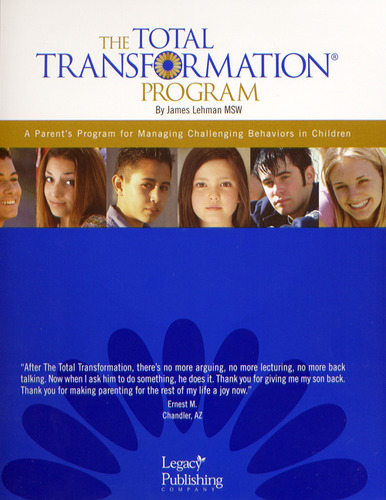
REVIEW of James Lehman's Total Transformation DISC 7 "How to Stop It Before It Starts"

In Lesson 6, James Lehman discussed how to identify the triggers within your family. In the 7th and final lesson of The Total Transformation Program, he outlines “The Trigger Management Process” which works to help you manage trigger thoughts before the feelings become too intense.

I found this idea to be interesting as I know that there have definitely been times when things get heated and all parties are getting too angry for our own good. Lehman does not subscribe tot he idea of  “anger management”which I found to be a bit novel. Instead he believes that anger does not need to be managed but instead needs to be managed. 

The following are the steps of The Trigger Management Process:
  1. Diminish the potential- avoid situations that bring on the triggers
  2. Manage the situation- escape negative situations
  3. Identify trigger thought
  4. Constructive self-talk
  5. Simple plan
  6. Communicate
  7. Implement
  8. Move on
What I loved about this program were these simple easy to follow steps. At the same time, because this program has both a workbook where you can work through the issues that are specific to your own family and that this is as well as the fact that it is an audiobook and you can go back and listen to the concepts as much or as little as you want.


All opinions expressed in this review are my own and not influenced in any way by the company.  Any product claim, statistic, quote or other representation about a product or service should be verified with the manufacturer or provider. Please refer to this site's Disclaimer  for more information. I have been compensated or given a product free of charge, but that does not impact my views or opinions.
-------------------------------------------------------------------------------------------
New to the Divadom?
Please Subscribe to my RSS Feed! Subscribe in a reader
Questions?Drop me a line at dadofdivas@gmail.com

REVIEW of James Lehman's Total Transformation DISC 6 "What to do after your child acts out"

Lesson 6 of The Total Transformation Program discusses The Alternative Response Process. James Lehman calls this lesson the “heart” of The Total Transformation Program.

This CD is full of great information and I can see why they state why this is the heart of the overall program. The Alternative Response Process by itself was an amazing process and one that I would love to start implementing in my own home. This process is a simple step by step process that addresses both large and small lessons. What I liked about this process is that it focuses on goal setting. It helps your kids by outlining what exactly goals are and how as kids they can better grasp the goals that parents are trying to enforce. I am still unsure about how well this will work with my eldest who is only 6.5, but I am willing to try. I can see how this program though will work perfectly with older kids.

Lehman explains that goals are products, not wishes. Goals are measured by commitments and commitments are pledges to perform specific task. Lehman continues by saying that commitments must be definitive, observable, realistic, reasonable and measurable. Too often parents set unrealistic goals that are not clear or attainable for a child, which causes them to fail, and causes the child and parent to become frustrated.

This lesson discusses “what will happen then” and answers the question “How will we know the goal is working?”. Lehman discusses the difference between a reward and an outcome, and stresses that not all goals need a reward.

There are 8 steps in the “Alternative Response”:

Step 1: Investigate: Ask the kid what happened and stick to the facts, not feelings.
Step 2: Confront: Meet it head on, honestly. State clearly what you saw going on.
Step 3: Identify: What were the triggers which preceeded the misbehavior?
Step 4: Challenge: Confront the kid’s perceptions about the trigger(s).
Step 5: Declare: Tell the kid to stop.
Step 6: Probe: What can you do next time?
Step 7: Choose: Ask the kid to choose how to handle it differently.
Step 8: Consequences and Amends: Not just an “I’m sorry”, but an amends. (Tee hee, this reminds me of my How to Apologize post.)

I really liked these eight steps and found them to be easy to understand and I am hoping to implement within the home. One of the things that Lehman does, especially in this lesson is use real life examples to help the listeners better understand and better comprehend what they must do to get similar results.

 The concept that “goals are not wishes” was a powerful one as I have been guilty in the past of having a lot of wishes for my children and not as many concrete goals. I think that I am starting to get better with the idea of being consistent with my rules and setting consequences for bad behavior but I know that I still have a little ways to go.

In the past I would raise my voice to be heard and I know that this is wrong and not effective, but am still working on this aspect of myself. I can see that in being more concrete with my goal setting so that my expectations are clear for my children. Also, just hearing an example of how to apply the lesson was very helpful. I hope to perfect The Alternative Response before as my kids get older so that we can have a pleasant household as my kids become teenagers.

All opinions expressed in this review are my own and not influenced in any way by the company.  Any product claim, statistic, quote or other representation about a product or service should be verified with the manufacturer or provider. Please refer to this site's Disclaimer  for more information. I have been compensated or given a product free of charge, but that does not impact my views or opinions.
 
-------------------------------------------------------------------------------------------
New to the Divadom?
Please Subscribe to my RSS Feed! Subscribe in a reader
Questions?Drop me a line at dadofdivas@gmail.com

Saturday, January 15, 2011

REVIEW of James Lehman's Total Transformation DISC 5 "Understanding Faulty Thinking"

In Lesson 5 of The Total Transformation Program, James Lehman tries to help parents understand faulty thinking and how it interferes with communication and problem solving.
To me, I seem to find faulty thinking everywhere in our culture today.  Just as children make errors in school, people also make errors in solving social problems or taking personal responsibility for their behavior, which leads to ineffective or unacceptable solutions.
Lehman starts lesson 5 out by outlining faulty thinking patterns:

Assuming: Jumping to conclusions and making uninformed decisions.

All or nothing thinking: Black and white thinking leaves no room for discussion about people or situations.  Avoid words like “never” or “always”

Personalizing: Blaming yourself for things you have no control over.  Don’t take it personally.

Hypodermic focus: Don’t put too much emphasis on one facet of the story.  For instance, forcing a child to look at you can take away from the larger message.

Embracing negativity: Rejecting positive feedback or suggestions.  When a child hears you respond to their negativity, their faulty thinking is challenged.

Emotionalizing: Feelings are emotions, not factual and true.  Feelings only have the value you place on them.  Parents can allow feelings at override calm, rational thought.

Projections: Mind reading.  Anticipating other people’s thoughts and feelings.  You will always fall short.

The blame game: Turning the issue around and putting other people on the defensive.  Placing fault, instead of responsibility.

Rule deflation: Keep the rules clear and consistent.  Rules shouldn’t change based on your mood/energy level.  The rules are the rules.

Uniqueness: “It won’t work for me because...”  My problems are unique and nobody understands.  This will not 

Excuses: Accept no excuses.  Excuses get in the way of making real change. 

Minimization: Making the harm done to others less hurtful than it really was in order to excuse the behavior.

Awfulizing: Projecting negative consequences and awful outcomes for any effort or action.

False self-perceptions: I’m so powerful, I don’t have to take the effort to change.  The same behavior will result in the same results.

Sincere self-delusion: We all believe what we think, even when our thinking is distorted.  Not knowing any better.

The issue with faulty thinking is that it inhibits a person's ability to see the problem accurately and finding a solution that works.  People also use faulty thinking to justify our behavior at times.  The goal in learning about faulty thinking is that we as parents can first learn to identify it in ourselves so we then can identify it in our kids and deal with it as we need to.

The end of this lesson discusses divorce.  While my family is not in this situation, we have had to deal with some issues relating to this in our extended family in the recent past. For families that are dealing with this though, Lehman offers a lot of really good advice.  I can say that I can completely understand how difficult divorce can be, but I agree with Lehman in saying that even though this is the case, kids still need to be held accountable for their behavior.

In listening to this lesson I came to find that I have some faulty thinking patterns in myself.  I know that I have devalued rules in the past after a long day at work or when I just want to have battles. I also have seen that I have accepted negativity in the past, especially with my eldest. Through listening to this CD I can see how this can send a mixed message to my kids and devalues the rules that I have set within my home. Overall, I know that I need to be more consistent, which is not easy, but it is something that will ultimately assist me become a better father and parent.


All opinions expressed in this review are my own and not influenced in any way by the company.  Any product claim, statistic, quote or other representation about a product or service should be verified with the manufacturer or provider. Please refer to this site's Disclaimer  for more information. I have been compensated or given a product free of charge, but that does not impact my views or opinions.
-------------------------------------------------------------------------------------------
New to the Divadom?
Please Subscribe to my RSS Feed! Subscribe in a reader
Questions?Drop me a line at dadofdivas@gmail.com

REVIEW of James Lehman's Total Transformation DISC 4 "Transformation Tools"

In lesson 4, parents are shown the tools that they need to be able to change the way in which they work with their child. Parents are told from the beginning of this entire program, but especially within this CD that it is their responsibility to implement the tools that they are learning and it is the responsibility of the child to change.

In this CD James Lehman, Behavioral Therapist and creator of the Total Transformation Program explains that you should not accept excuse for abuse. He suggests that all parents place this sentiment on on the index card on their refrigerator where they can see it everyday and they can live the sentiment likewise.

In this CD, Lehman talks about abusive behavior and what to tolerate and not to tolerate. He makes it very clear that no parents should tolerate hitting at any time. He states that no child should hit anyone at anytime under any circumstances. Self-defense is not abuse but 'if he hits you and you strangle him on the floor' - that's abuse. That's abuse because over-reaction can cause abusive behavior. Remember, accept no excuse for abuse.

Lehman also explains that parents must send out a Clear Direct Statement to their children. Parents must be firm and clear about what you want to say or if you want something to stop. Say the statement and walk away without waiting for responses.

If you have a child suffering from oppositional defiant disorder this will be challenging as they will challenge you when you impose a statement. What is important though is to make sure that this type of child does not make a turnaround out of you. I particularly liked this section as we are starting to believe that Diva-J may have some issues with ODD. We do not know this for sure, but are starting to get some inklings that it might be the case, and in this CD, Lehman does help parents with ODD children better understand them and how to work with them.

More specifics and purchasing information for The Total Transformation can be found on their website or on Amazon!

All opinions expressed in this review are my own and not influenced in any way by the company.  Any product claim, statistic, quote or other representation about a product or service should be verified with the manufacturer or provider. Please refer to this site's Disclaimer  for more information. I have been compensated or given a product free of charge, but that does not impact my views or opinions.


-------------------------------------------------------------------------------------------
New to the Divadom?
Please Subscribe to my RSS Feed! Subscribe in a reader
Questions?Drop me a line at dadofdivas@gmail.com

REVIEW of James Lehman's Total Transformation DISC 3 "Breaking Through"

Lesson 3 of the Total Transformation Program explains Culture and Accountability in a family. It is mutual and therefore both parent and child will take responsibility and accountability of their own actions and words. Building a great culture is not easy but by doing this you allow for an aura and environment of love and responsibility to show up in your home. By doing this you are able to then deal with and solve other issues especially with children that are struggling with behavioral issues such as oppositional defiant disorder, misbehavior, obnoxiousness, ADD/ADHD, disrespectfulness, lying and even anger issues.

James Lehman, in this lesson, explains that parents must build a culture in the family that says "This is how I'm going to talk to you and this is how you have to talk to me". "This is what I'm going to expect from you and this is what you can expect from me." While I would love this in my own home, I know that I have a little ways to go before we are there, which is one reason I liked this CD!

This CD also tries to explain that both parents and children have differing roles and responsibilities within the home. Parents must pay the rent and provide food and shelter for their family while children must do their school work and behave appropriately. This CD talks about accountability and how children need to be able to learn to be accountable for their own things, actions and talk appropriately, solve their problem without hurting other people in any way.

This CD also gets into being responsbile in the love that we show our children. Lehman talks about how there is a difference between love their child 'unconditionally' and allowing our children to be responsible for their actions. What Lehman hopes no parents will do is step in and complete tasks for their child, as this will not assist the child in their own development.

In a culture of love, Lehman describes that the culture should be:

"I love you and that's why I'm not going to do your homework for you".

"I love you and that's why I'm going to teach you how to do it".

As with many parents I love my children unconditionally, but helping them to learn and grow is very important and something that I know that I have to help my children with as a father as they get older.

More specifics and purchasing information for The Total Transformation can be found on their website or on Amazon!

All opinions expressed in this review are my own and not influenced in any way by the company.  Any product claim, statistic, quote or other representation about a product or service should be verified with the manufacturer or provider. Please refer to this site's Disclaimer  for more information. I have been compensated or given a product free of charge, but that does not impact my views or opinions.

-------------------------------------------------------------------------------------------
New to the Divadom?
Please Subscribe to my RSS Feed! Subscribe in a reader
Questions?Drop me a line at dadofdivas@gmail.com

REVIEW of James Lehman's Total Transformation DISC 2 "Why Won't My Child Listen to Me?"

James Lehman, in his Total Transformation program (DISC 2), says that parents have a pictured of the ideal child that they hope to have even before they have a child. Lehman states that  parents want a child who listens and is respectful, but many times they have a child who has other ideas. In any case, all children, especially those who challenge authority, require a firm and consistent parent who will help him or her learn to manage his behavior on his own.
I liked the idea that you have to look at parenting as running a factory and answer the question about What type of product should your factory produce. Once you identify this, you need to identify what you have to do to get the product you want out of your factory.

Lehman also describes in disc 2 the idea of the ineffectiveness of "Over Negotiating." You tell Tommy that it’s time to go to bed. Well, he doesn’t want to go to bed. He wants to watch television. This begins  the negotiation pattern that becomes so common between a parent and child. What Lehman brings out in this CD is that many parents who over negotiate, teach their child that, “I don’t mean what I say the first time. I need your input to make a decision.” This is not a scenario that you want to be in as a parent.

Due to this negotiation, parents tend to find that their children won’t listen to you the first time? It may be because the parents have created a negotiation framework between them and their child. Lehman does explain that there is a fine line here because what he is referring to is Over-Negotiation. There are definitely times when parents will need to negotiate on things such as clothes to wear, movie to go see, etc. In many situations, asking for your child’s input is a good practice. This communicates love and value to your child. When parents to over negotiate, the parent is giving the child too much power in important areas. So, instead of the parent making a decision in the best interest of the child, the child gets his way a lot more than he should.

Overall, this CD explains that when you say something, you must mean it, and expect your child to follow through. Anything less, drastically throws off the balance of power and the child gains a foothold in areas that should be left exclusively to parental decision making.

More specifics and purchasing information for The Total Transformation can be found on their website or on Amazon!


All opinions expressed in this review are my own and not influenced in any way by the company.  Any product claim, statistic, quote or other representation about a product or service should be verified with the manufacturer or provider. Please refer to this site's Disclaimer  for more information. I have been compensated or given a product free of charge, but that does not impact my views or opinions.
-------------------------------------------------------------------------------------------
New to the Divadom?
Please Subscribe to my RSS Feed! Subscribe in a reader
Questions?Drop me a line at dadofdivas@gmail.com